DNA Barcoding in the Neubig Lab
Barcoding the Flora of Florida and North America
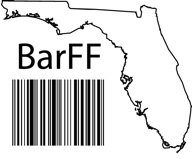
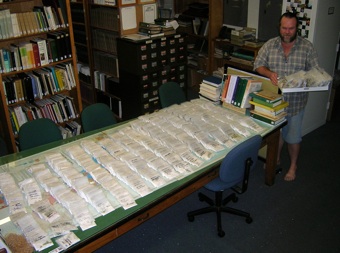
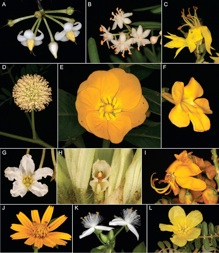
The central premise of DNA barcoding is that each species has a unique set of DNA, of which a carefully chosen subset (a “DNA barcode”) can serve as a baseline reference for comparative identification.  With DNA barcode data, identification of plants is possible at all life stages, from seed to mature plant with very little tissue necessary for identification.  DNA barcoding has potential applied utility for all research, wildlife/land management, and conservation efforts that rely on identifying plant species, and it also has applications in forensics, biosecurity, trade in controlled species, and scientific questions involving evolution, biogeography, and population structure.  We are building the
backbone for a Barcoding the Flora of Florida project, along with many other species from throughout North America, and have already collected DNA material for over 2,000 species in Florida, with plans to include all vascular plant species in Florida.  As a preliminary examination of Florida plants, we have sequenced all of the most noxious weeds of Florida (according to Florida Exotic Plant Pest Council), including 136 species.  Because of the goal of species-level identification, we are also making vouchers, select photographs, and a reference set of high-quality DNAs.


In collaboration with the Florida Fish and Wildlife Department, we sampled the 136 most noxious invasive plant species of Florida as a preliminary set of taxa.  We sampled matK, rbcL, and the trnH-psbA intergenic spacer, which have been proposed as universal barcoding regions for plants (CBOL Plant Working Group).  We plan to add ALL vascular plant species present in Florida for the completion of this project in the future.


Collaborators: J. Richard Abbott, Lucas Majure, W. Mark Whitten, Norris Williams, Kent Perkins


Funding sources: UF, Florida Fish & Wildlife* (originally Dept. of Environmental Protection), IFAS (UF)

 

Barcoding and Flora of the Ordway-Swisher Biological Station


Details upcoming...


Collaborators: Lucas Majure, W. Mark Whitten, Norris Williams, Walter Judd, Doug Soltis, Pam Soltis


Funding: IFAS (UF)